
How to Write References in APA 7th Edition
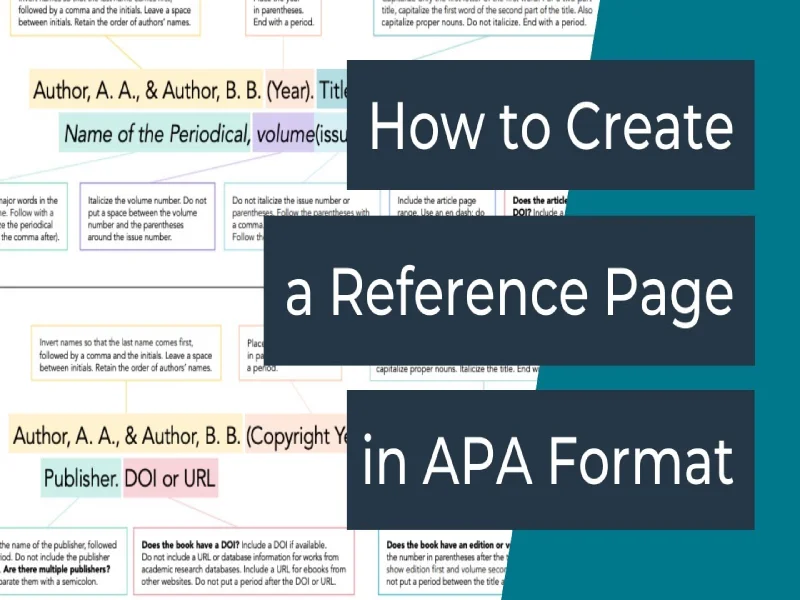
The reference list usually gets left for last. It gets written in a hurry, right before submission, once the actual thinking has already been done.
That’s exactly where things start going wrong. A messy reference list gets spotted fast by markers, and marks get lost even when the argument itself was strong. New rules were brought in by APA 7th edition too, different enough from older editions that old habits can quietly cause trouble now.
None of it takes long to fix once the basics are actually understood. Most of the confusion around APA 7 comes from older habits getting carried forward, not from the current rules being especially hard on their own.
Referencing is the Part of an Assignment Everyone Rushes
What APA 7 Actually Expects from a Reference List
A handful of formatting rules sit at the center of APA 7. Once these are followed properly, most common mistakes disappear on their own.
A hanging indent is needed for every entry. The first line stays flush against the left margin, and every line after that gets indented by half an inch. The whole list is double-spaced, both within each entry and between entries.
When no author is listed, the first meaningful word in the title is used to decide the order instead. One space is left after every period or comma and page numbers are separated with an end dash rather than a regular hyphen.
DOIs, wherever they exist, are written as a full clickable link starting with https://doi.org/. The phrase “Retrieved from” is no longer placed before a URL or DOI, that rule was dropped a while back.
Why Singapore’s Education System Takes This Seriously
Referencing standards are kept strict across Singapore’s Education System. Universities like NUS, NTU, and SMU expect properly formatted citations as a baseline requirement, not a nice extra.
Small errors that might get overlooked elsewhere are sometimes flagged more seriously here, particularly in modules where academic integrity gets checked closely. A lot of stress can be saved by getting comfortable with APA 7 early on, before assignments start piling up mid-semester.
Group projects add another layer of difficulty too, since references collected by different team members often end up formatted inconsistently. Agreeing on a shared citation style and a single reference manager at the start of a group assignment tends to prevent a messy merge later.
Common Reference Types, Laid Out Clearly
Seeing the format written out helps more than reading rules about it alone. A few common source types, done properly:
Journal article:
Author, A. A. (Year). Title of the article. Journal Name, Volume(Issue), page range. https://doi.org/xxxx
Book:
Author, A. A. (Year). Title of the book (edition, if applicable). Publisher.
Website:
Author, A. A. (Year, Month Day). Title of the page. Site Name. URL
A publisher’s location is no longer needed for books either, a small change from the 6th edition that catches people out constantly.
Sources Without a Clear Author
An organization, government body, or company is often listed as the author instead of a named person. When this happens, the organization’s full name is used in place of a surname, both in the reference list and the in-text citation.
Sources with no identifiable author at all, some older webpages fall into this category, are alphabetized by the first significant word in the title. Words like “A,” “An,” and “The” are skipped when working that out.
Edited books bring their own small twist too. The editor’s name is listed, followed by “(Ed.)” or “(Eds.)” for multiple editors, rather than treating them the same way a standard author gets treated.
Smart Rules for Students Who Keep Losing Track of Sources
A few habits make referencing feel a lot less overwhelming. A huge amount of time gets saved by keeping a running list from day one of research, rather than trying to reconstruct everything from memory later.
A few Study Tips for Students worth adopting:
- The DOI or URL gets saved the moment a source is found, not later
- A reference manager, like Zotero or Mendeley, gets used for longer projects
- Alphabetical order gets double-checked before submitting, an easy thing to miss
- In-text citations and the reference list are kept consistent with each other
- A separate notes file is kept for page numbers needed for direct quotes
None of these take much effort individually, but chaos tends to happen right before a deadline hits when all of them are skipped.
How a Small Slip Turns into a Real Problem?
A missing reference, or something cited in-text but never listed at the end, isn’t just sloppy formatting. Genuine academic integrity concerns get raised by this, since an unreferenced claim can look unsupported, or worse, plagiarized.
Learning to avoid academic penalties starts with referencing being treated as part of the actual writing process, not something tacked on afterward. Citation accuracy is taken seriously by universities precisely because it’s tied so closely to academic honesty.
Even accidental referencing errors, ones with no intention to mislead behind them, can still trigger a review process at many institutions. Being able to show a clear, well-organized research trail tends to matter as much as the final formatting itself.
Matching In-Text Citations to the Reference List
These two pieces need to line up exactly, and mismatches are one of the most common issues flagged by markers.
An in-text citation in APA 7 usually reads (Author, Year), or Author (Year) if the name is already used in the sentence. A page number is needed for direct quotes too, written as (Author, Year, p. XX). A matching entry on the reference list is needed for every in-text citation, and every entry on that list needs to actually be cited somewhere in the body. Just as much trouble is caused by extra references padding out a list without ever being cited as by missing ones.
When three or more authors are involved, only the first author’s surname gets used in-text, followed by “et al.” This applies from the very first citation onward in APA 7, a change from the 6th edition, which required all authors to be listed the first time around.
Doing Assignments without the Last-Minute Panic
For anyone doing assignments under genuine time pressure, referencing often becomes the thing squeezed out once a deadline gets close. That’s usually a mistake, since far longer is taken fixing citations properly at the last second than building the list gradually as research happens.
The late-night scramble a lot of students end up dealing with can be prevented by setting aside fifteen minutes after each research session, just to log sources properly. Breaking a large assignment into smaller research blocks, each with its own citation check, also tends to keep the whole process from feeling overwhelming near the end.
When Getting Outside Support Actually Makes Sense
A #1 Rated Professional Assignment Writing Service is sometimes looked toward by students juggling several deadlines or unfamiliar citation rules, mainly for help getting formatting and structure right before submission. When this is done well, genuine understanding of the rules gets built, rather than the thinking simply getting handed off entirely.
Feedback on a draft reference list, pointing out inconsistent formatting or missing entries, tends to build real skill a lot faster than starting from scratch alone ever does.
Where the Line Actually Falls
A real difference exists between getting help understanding a rule and having someone else complete the whole assignment. A shortcut under real pressure is usually what’s being chased by students who search to pay someone to write my assignment, but a problem tends to get created later once exams or independent research work demand the same skills done solo.
Real skill is built over time through feedback on structure or formatting. A problem just gets delayed, not solved, when the thinking is handed off entirely.
Clear Doubts About Referencing in APA 7th Edition
What changed most between APA 6 and APA 7?
Dropping “Retrieved from” before URLs, allowing up to 20 authors instead of 7, using “et al.” from the first citation with three or more authors, and no longer requiring publisher locations for books are among the biggest shifts.
Does every source need a DOI listed?
Only if one actually exists. A DOI isn’t included in plenty of older articles, and it’s fine to leave it out when that’s the case.
What’s the fastest way to catch reference mistakes before submitting?
Every in-text citation should be cross-checked against the reference list, and the other way round too. Ordering mistakes are also spotted quickly by reading the list alphabetically.
A Clean Reference List Says More Than It Looks Like It Does
A properly formatted APA 7 reference list helps avoid more penalties. It shows research was taken seriously, and sources were tracked carefully instead of being thrown together at the last second.
The whole process tends to get faster with time, not slower, once the core rules are gotten comfortable with: hanging indents, alphabetical order, matching citations. What feels tedious in first year usually turns into second nature by the time a dissertation comes around.

I am a dedicated academic writer contributing to the AssignmentsHelpQA blog creating easy to understand content for students. I have a lot of experience with academic writing and research, especially with assignments, essays, and educational blog posts. I help students grasp difficult subjects by explaining them clearly and organizing my writing well. My skills include research help, editing, proofreading, and creating content for academic purposes. I want to offer useful tips and ideas to help students get better grades.